
Borderline
Kinoshita Kabuki brings a Kabuki classic to the Japan Society

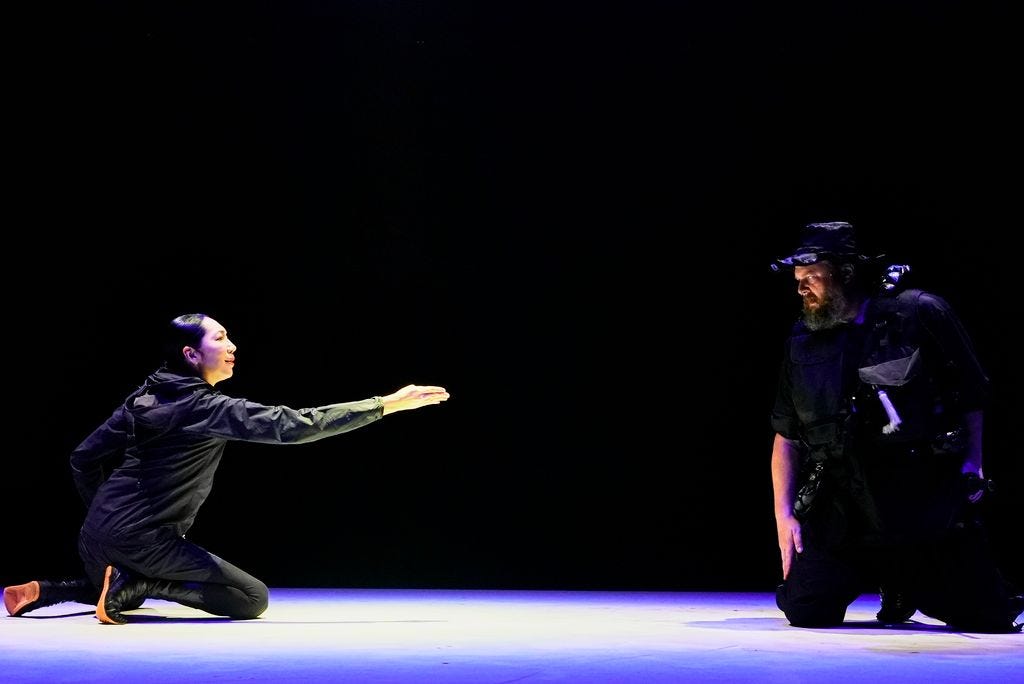
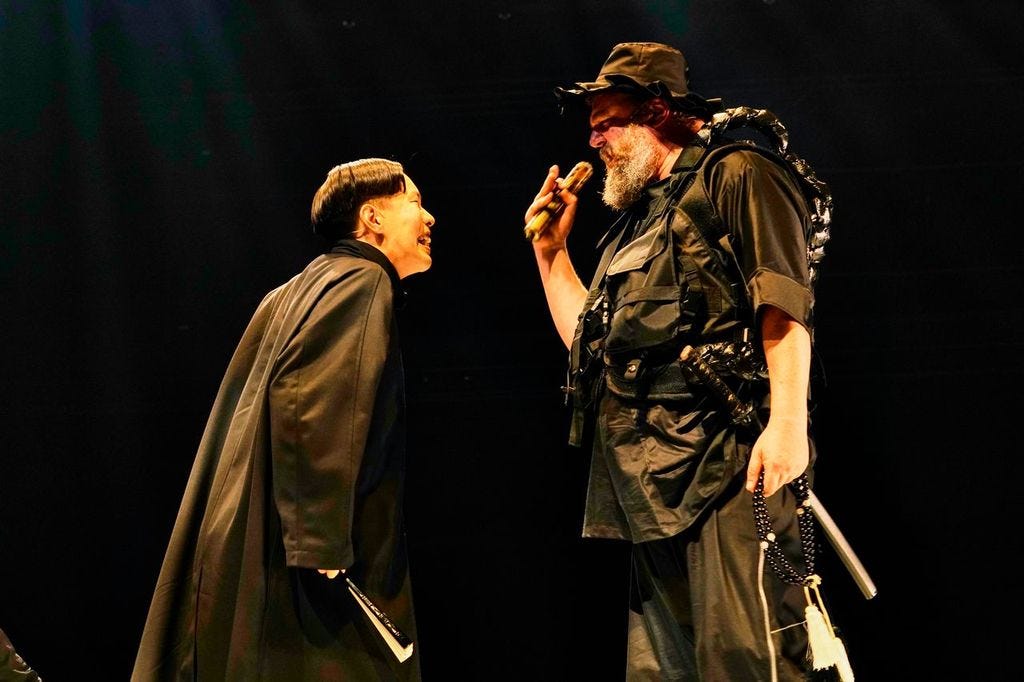
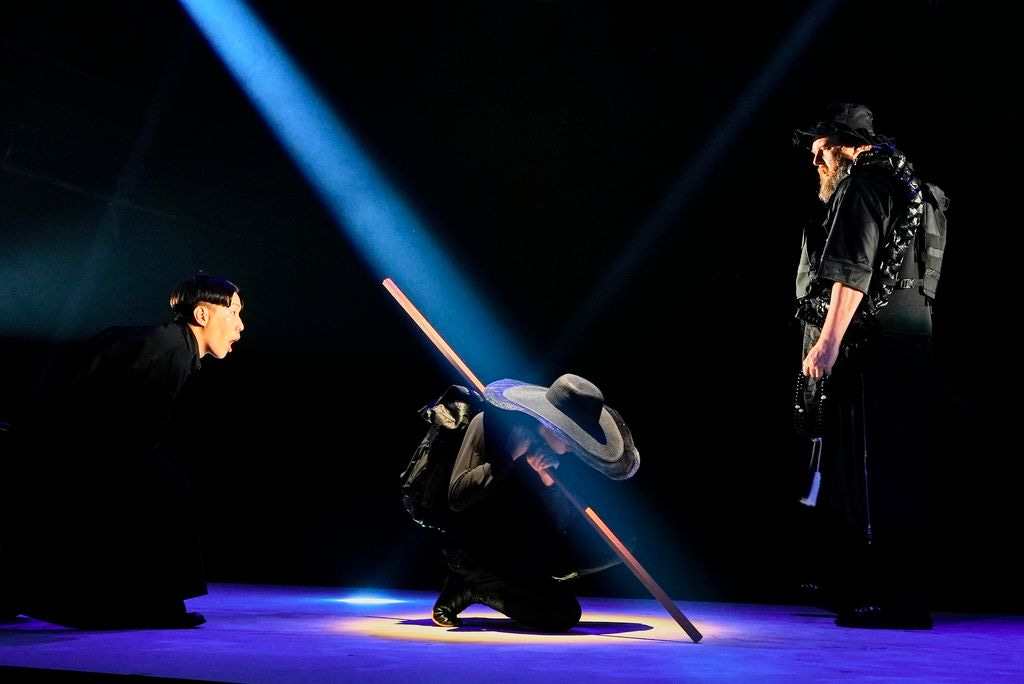
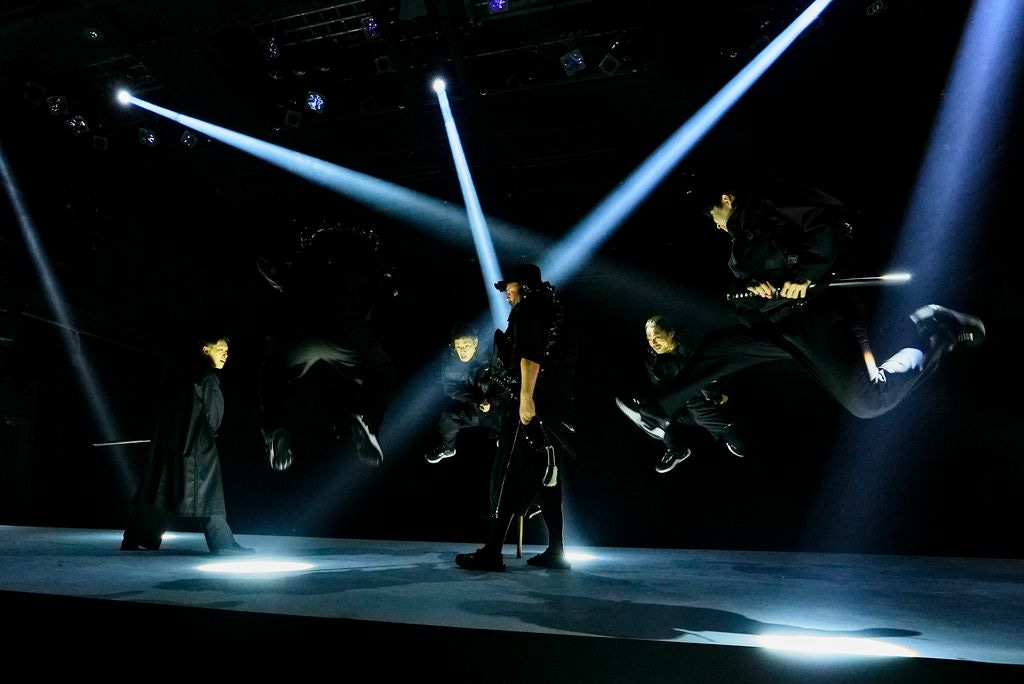
Kabuki is a popular art dating from the Edo period. The characters are larger than life, the delivery expressive; there is dance, stylized movement, combat, the doubling and tripling of roles. This weekend at the Japan Society I saw Kanjincho, a classic kabuki play, reinterpreted by the playwright Yuichi Kinoshita for Kinoshita Kabuki. (The performance was part of the Under the Radar festival.) The story, drawn from Noh, revolves around the escape of a defeated nobleman and warrior, Yoshitsune, across a border. He is disguised as a porter, and accompanied by his faithful squire, Benko, and several guards. At a checkpoint, they must convince a guard to let them pass. Resourceful Benkei tries several ruses, even resorting to beating his master—offending the moral order—in order to convince the guard that the man is not Yoshitsune. The guard suspects the truth, but lets him pass anyway. It's a play about loyalty, trust, and humility, the power of performance, and man's willingness, at times, to look the other way. The guard lets Yoshitsune through because he is so impressed by the lengths Benkei is willing to go to save his master. He knows he will be punished by death for his lapse. The atmosphere is heightened.Here, the play is performed in a hybrid modern-traditional style. There is stylized movement, like slow-motion walking and beautiful gesturing with the hands and fans. But also rock music, rap, beats, and pulsating light. A battle early on looks like a video game, and at one point the actors break out in song, like a boy band. And my favorite idea: an actor vocalizes the sound of the shamisen, the traditional instrument that accompanies Kabuki. Benkei is played by an American actor, Lee V, who looks more like Falstaff than a Japanese warrior. Yoshitsune is the wonderfully still Noemi Takayama, a transgender woman actor with a powerful, deep voice. Many of the innovations work well, adding humor and strangeness to the tale. (The boy-band moment is the least convincing bit.) Despite the humor, there is a lot of tension. I was struck by this line:"Our world is in chaos, overrun with dread." I must say, it hits particularly close to home. Photos by Ayumi Sakamoto.
414055 Jean: A wonderful description of a traditional dance form taking a bow to mixing up the Japanese Kabuki tradition. I wish I'd seen it.