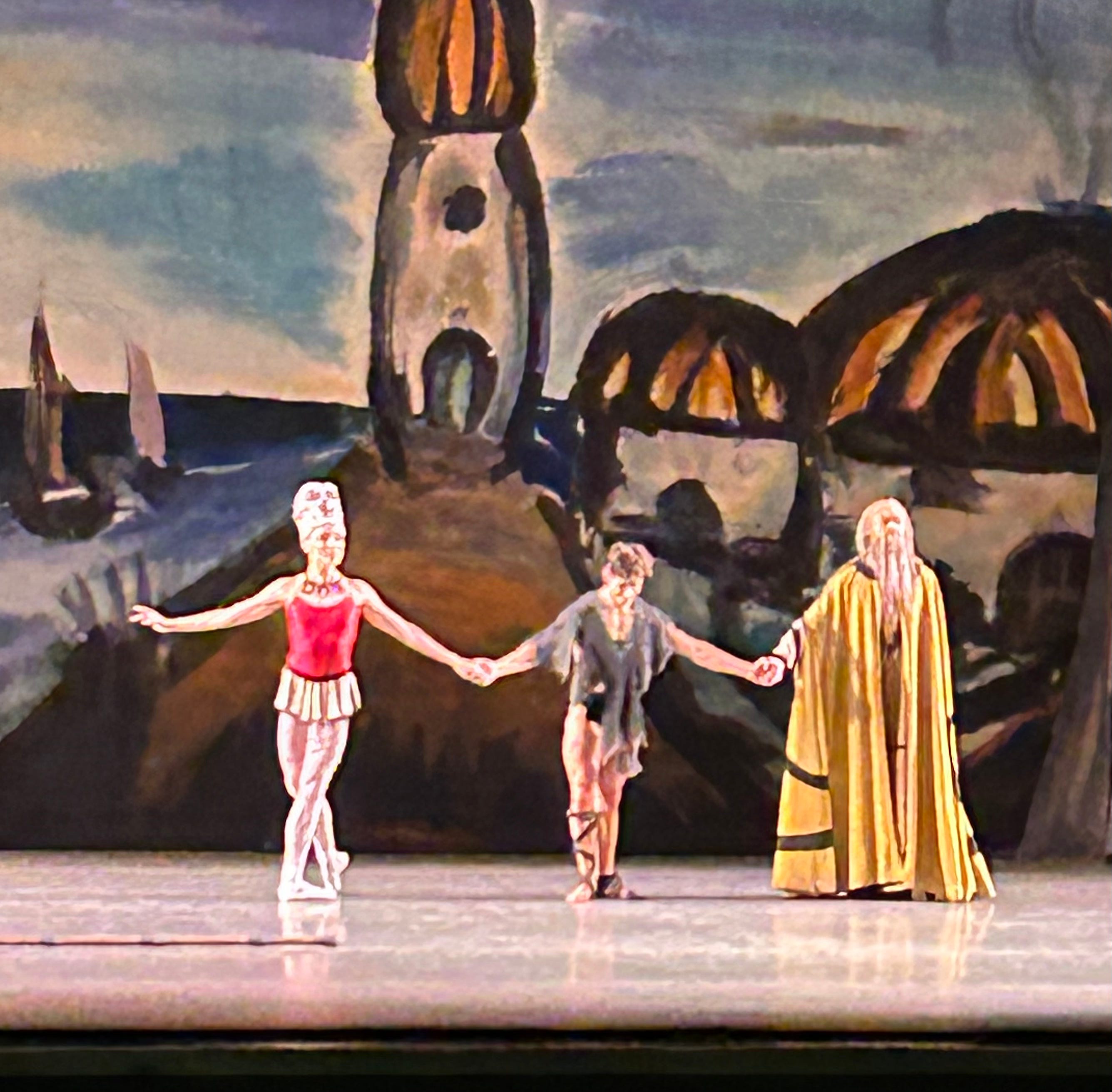
Two Débuts
Emily Kikta and Roman Mejía step into Prodigal So

This afternoon, a double début. There are two male roles in the Balanchine repertory that every man in the company covets: Apollo and the prodigal in Prodigal Son. Both ballets are tales of growth. An education through art in the case of Apollo, and through the school of hard knocks in the case of Prodigal. But where Apollo is a god-in-the-making, the prodigal is very much a young man of earthly desires. Roman Mejía, perhaps NYCB's most exemplary male bravura dancer, and a real charmer onstage, débuted in Apollo last year. Now he has stepped into Prodigal. He brings a similar quality to both: boyishness, even laddishness. A smart choice for a dancer with a supremely sunny disposition, something he has to fight against in this role.
In the opening section, Mejía made clear that the impetus for his departure from the paternal home wasn't frustration (as it is usually portrayed) but lust for life. It makes the first scene less powerful, but works well in the following scene, the boozy feast. Mejía appears delighted by every new experience, from stomping around and crowd-surfing with the goons, to his initiation into the mysteries of sex by the Siren. (Also—Mejía’s musicality: The syncopated dance with the goons was excitingly angular.) What was touching about the way he depicted the character’s subsequent downfall was the way he emphasized his shame, rather than his misery. He made much of the way the character covers his face, as if to say, “How could this have happened to me?!” He was a boy who had never experienced humiliation before that moment, and it was that feeling that made him want to return to his father’s arms. Mejía still needs to grow into the role, but the seed has been planted.
Emily Kikta, in contrast, arrived at the role of the Siren fully formed. She is perhaps the most coldly lethal Siren I’ve seen, dominating, distant, mechanical, inhuman. Throughout the banquet and subsequent pas de deux, her sharp cheekbones remained rigidly impassive. Nor was there any pleasure or glee in her interaction with the Prodigal, just lethal force. She brought to mind the automaton in Paul Taylor’s Big Bertha, a dispassionate destroyer of lives.