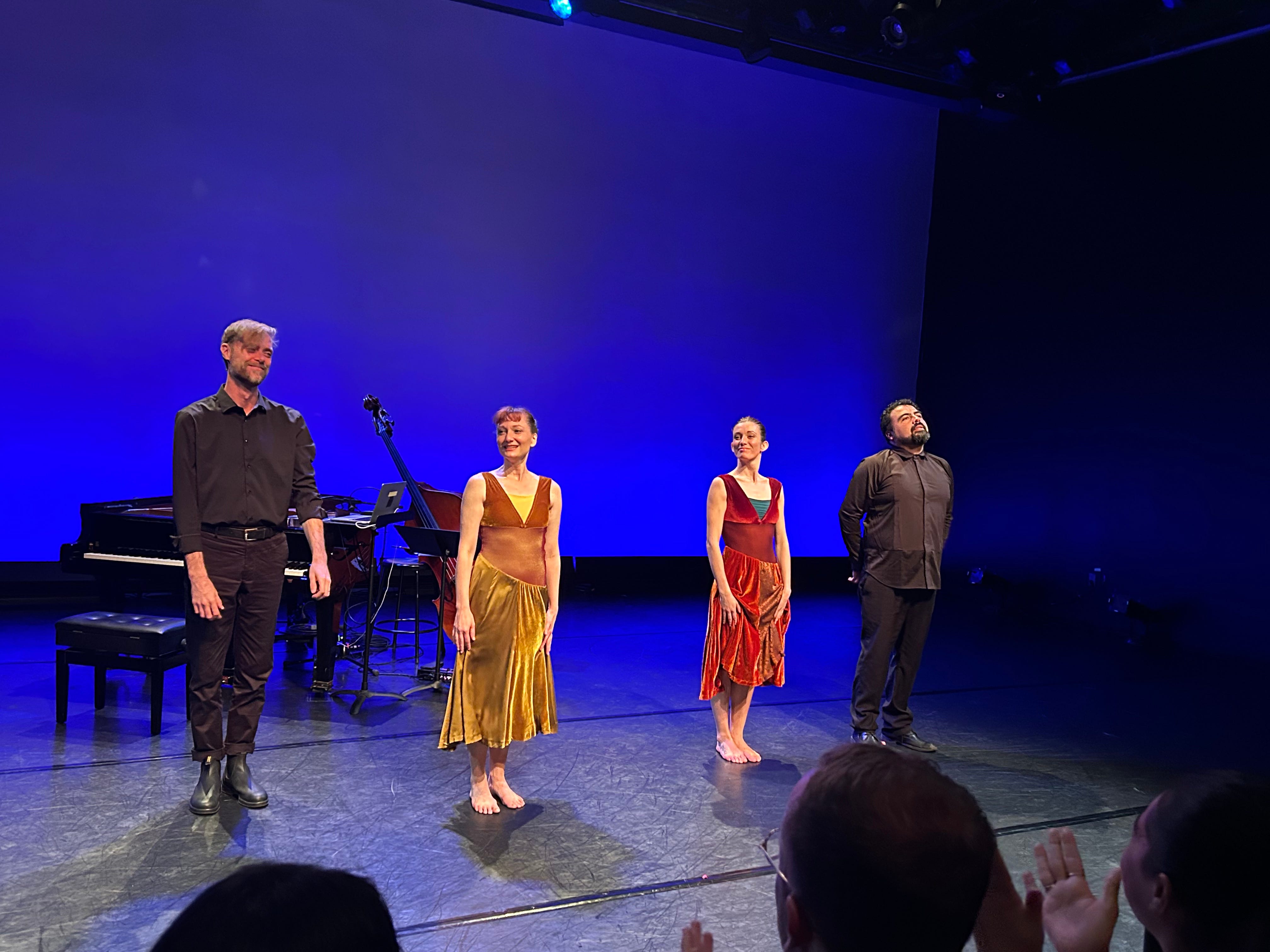
Amanda Treiber branches out

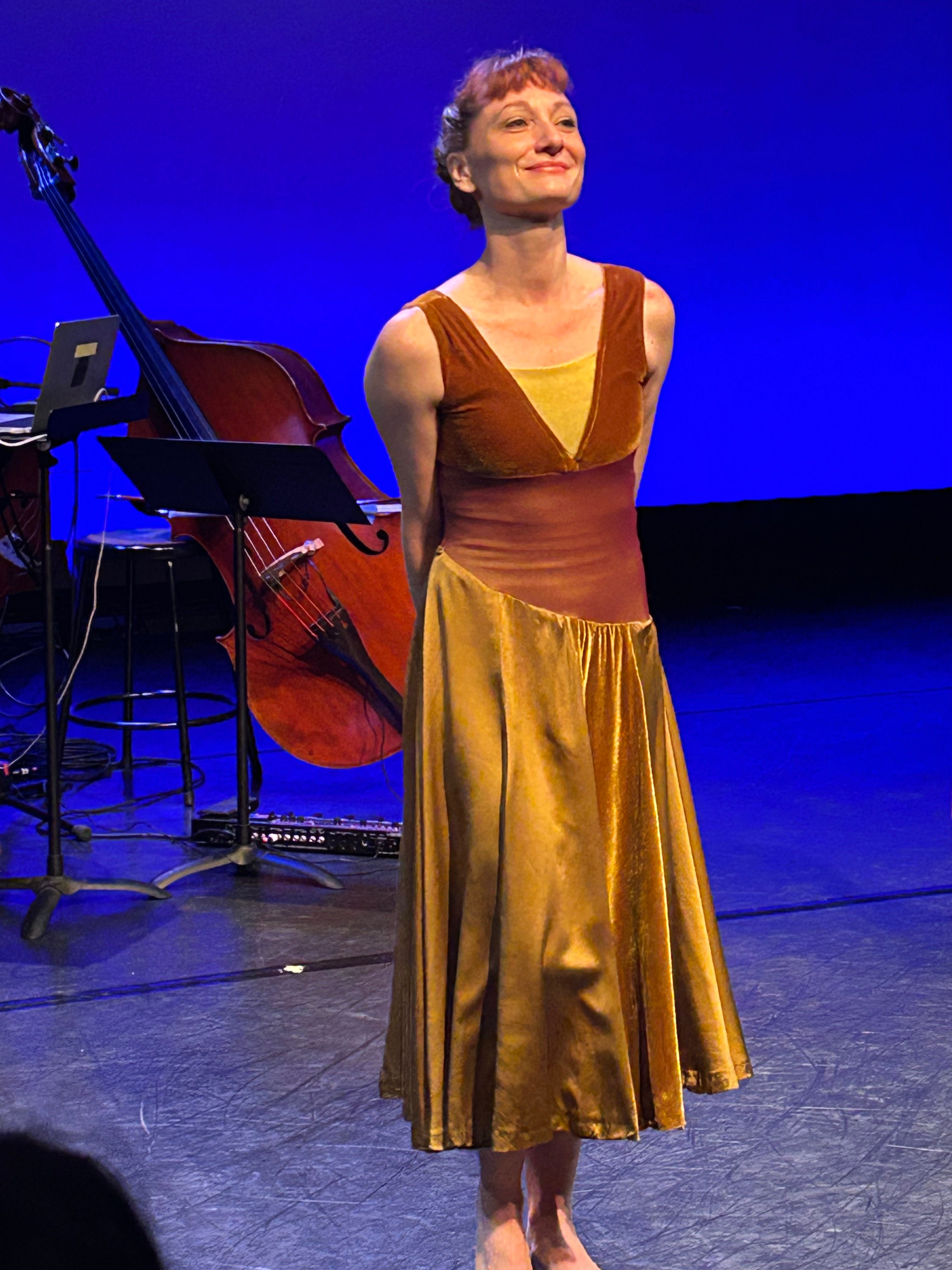
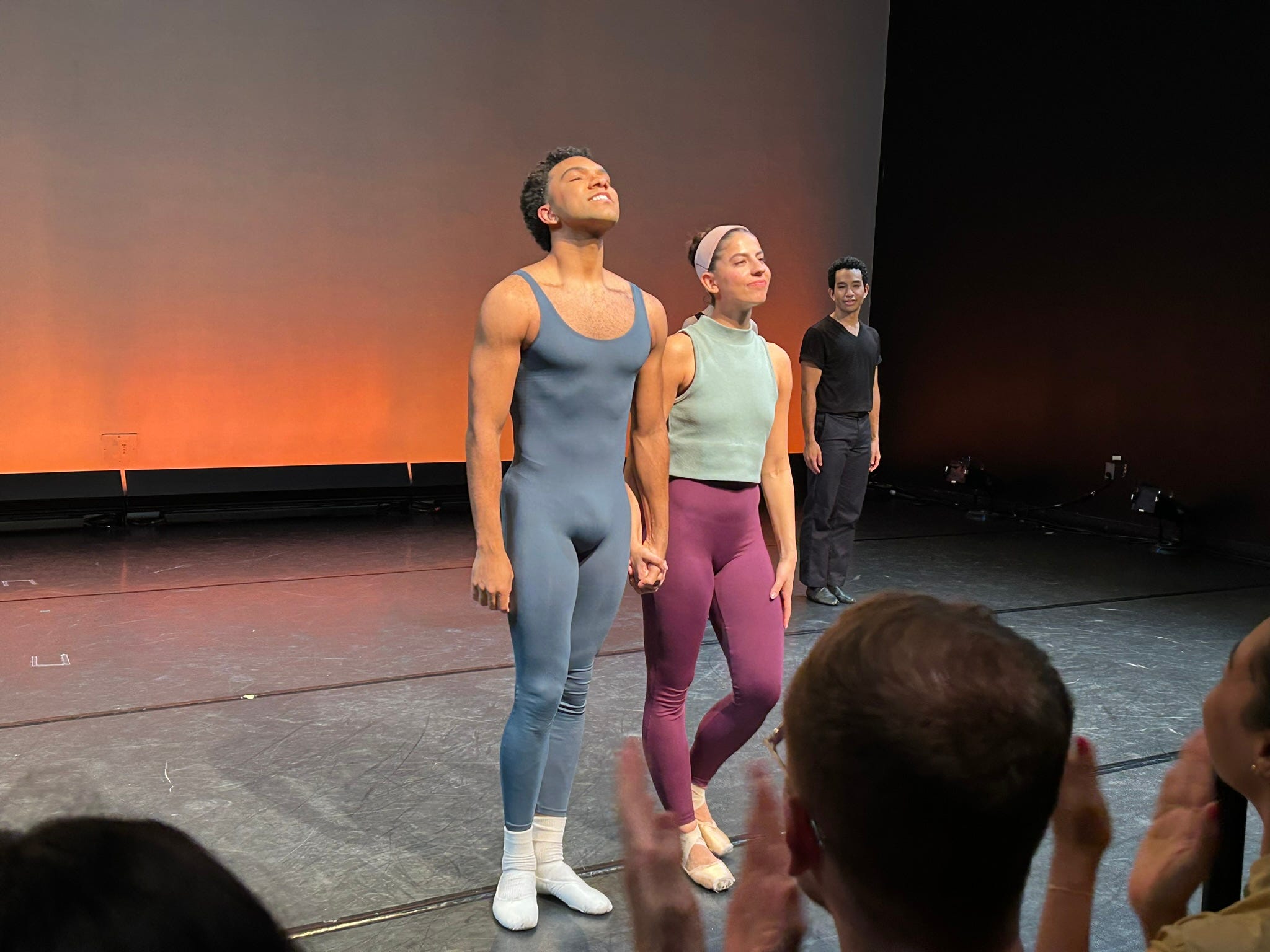
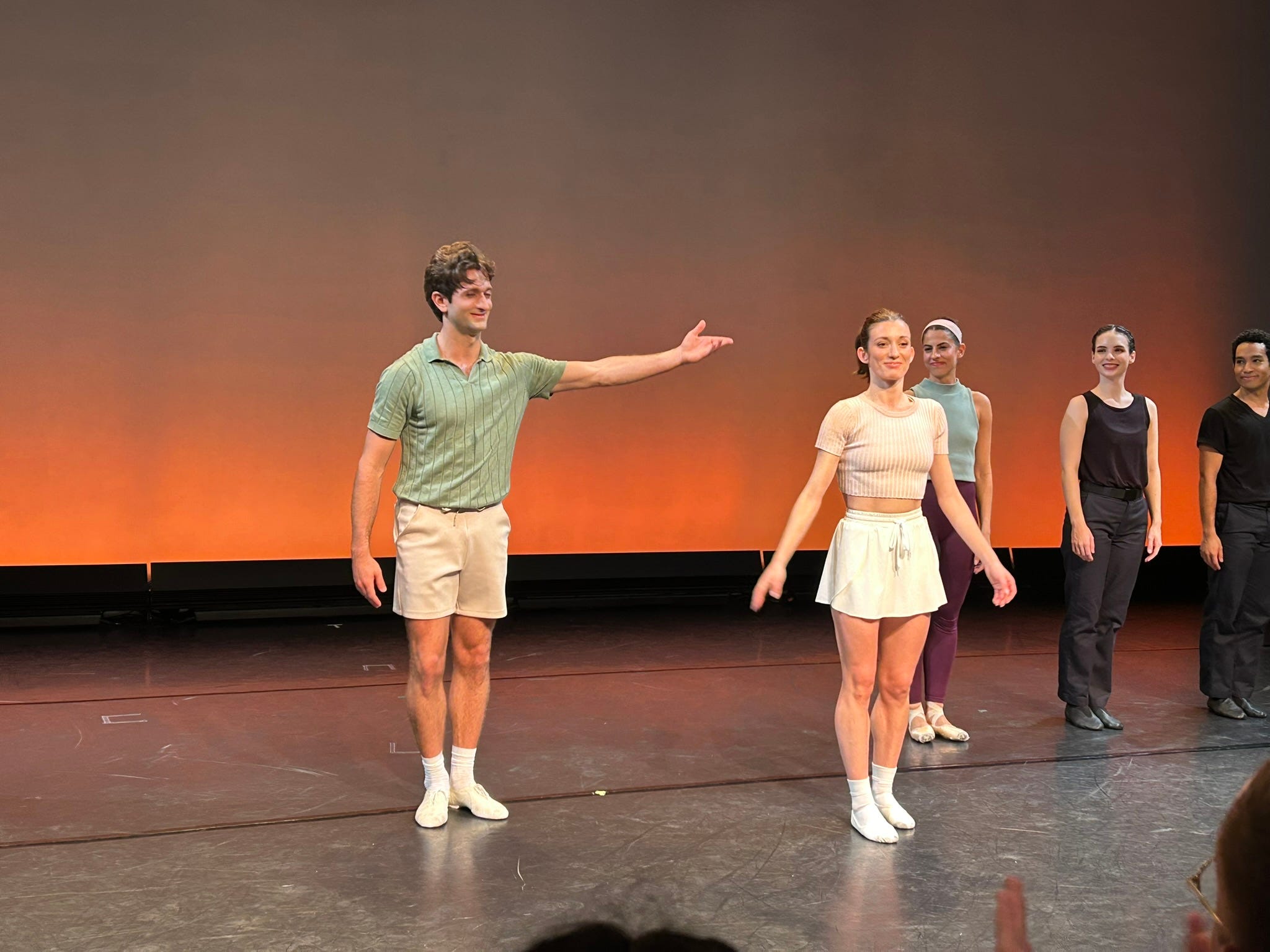
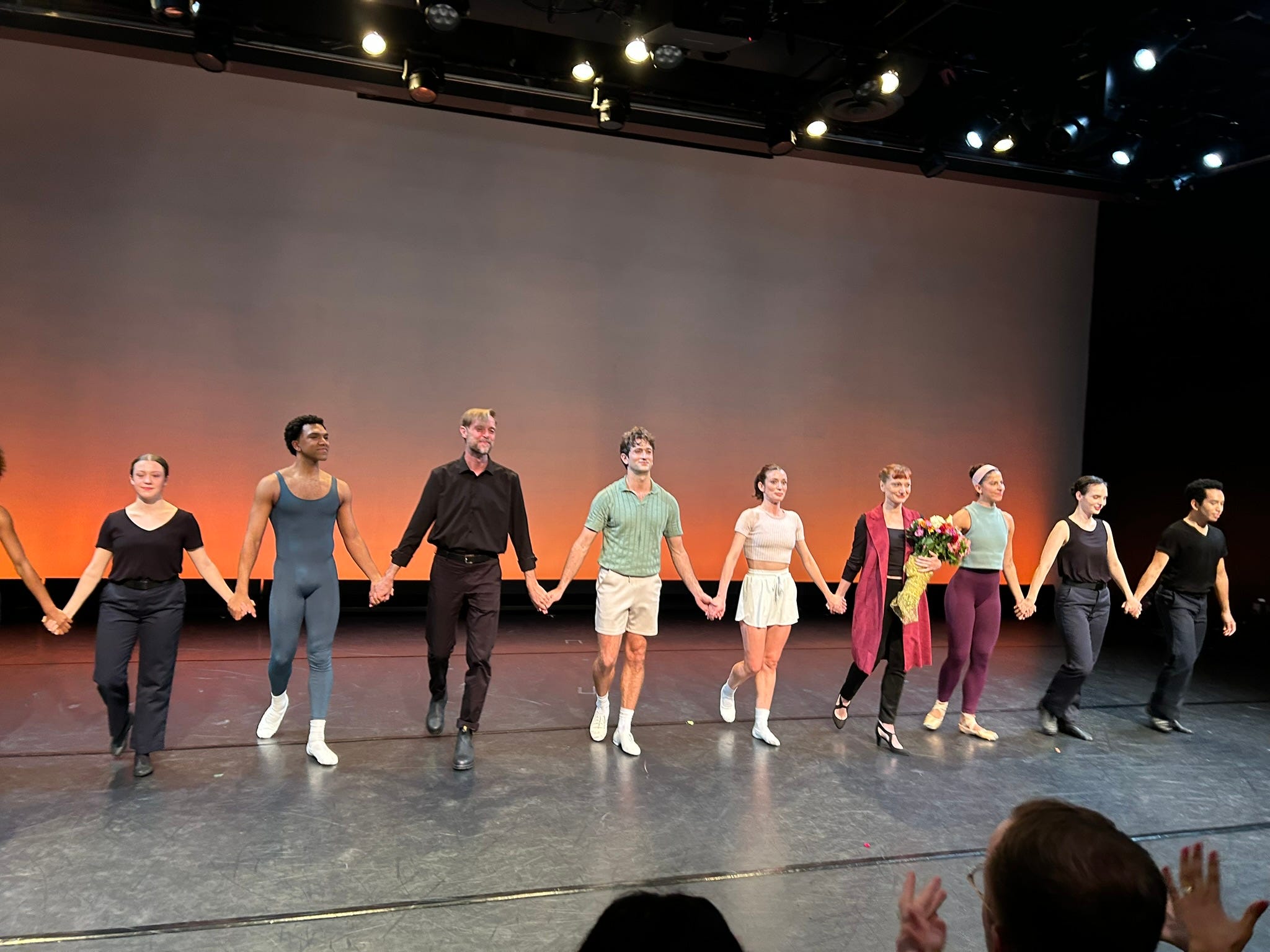
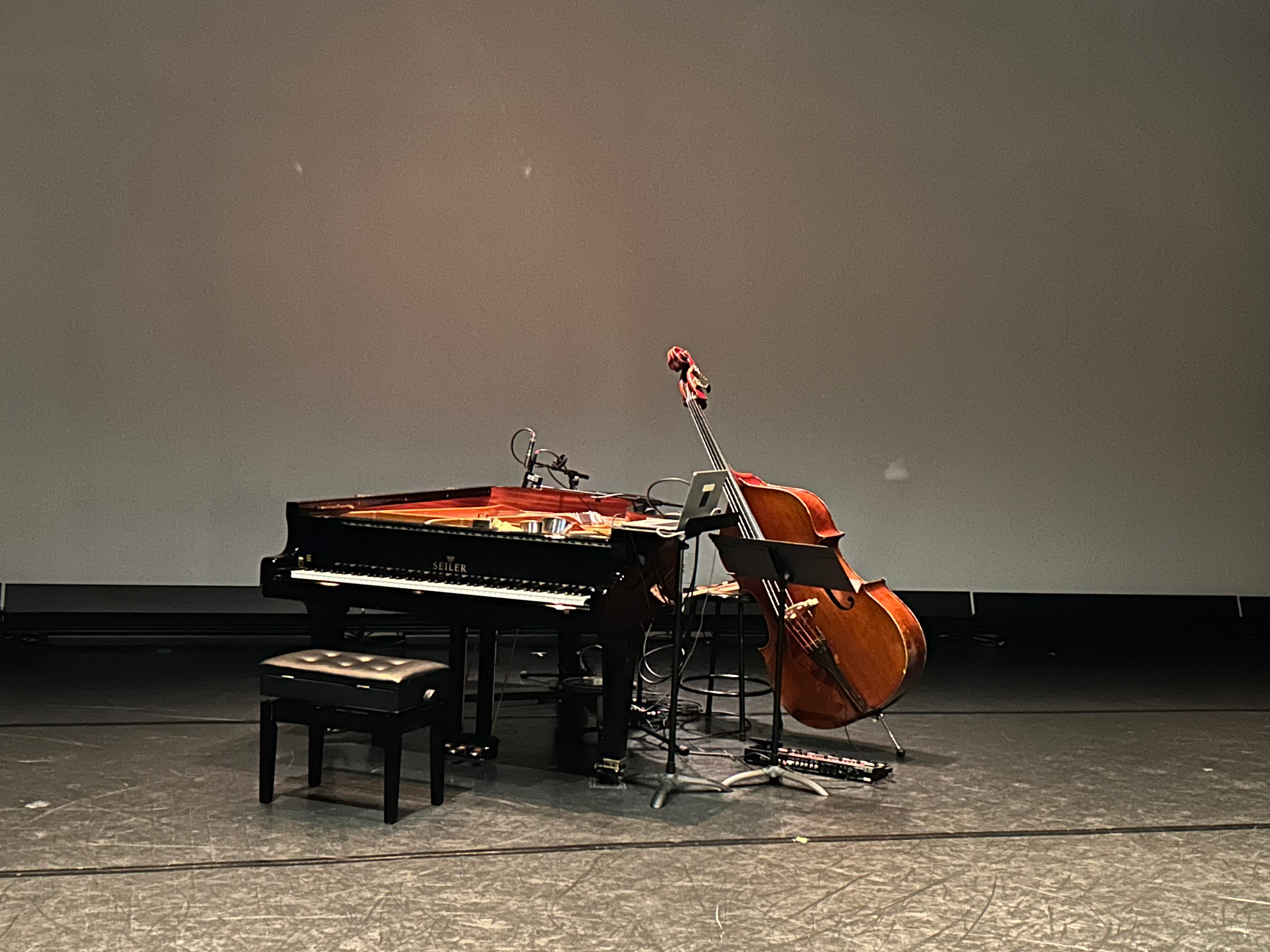
I’ve always respected Amanda Treiber, a longtime member of New York Theatre Ballet, as a performer, whose dancing exhibited wit, precision, and musicality. She also seemed to keep something to herself, a point of view and maybe a little bit of a secret. I’m not surprised that she is also a choreographer. She has now put together a small company, AT & Co, which had its début in Brooklyn this weekend. The music was played by her husband, Michael Scales, a skilled pianist with a sensitivity for dance; and the Chilean double-bassist Manuel Figueroa-Bolvarán. The dancers came from NYCB (Victor Abreu and Harrison Coll), NYTB (Giulia Faría, Mónica Lima), and elsewhere. On the program were two works, “why I can’t come to the phone” (a premiere) and “Madera” from 2021. I was especially struck by “why I can’t come”—by the very personal atmosphere of the work, and by the way Treiber shows her dancers as real people, with sensitivity but without sentimentality. They dancers see each other, and we see them. Each section is a kind of mini portrait. The music is a selection of piano pieces by Philip Glass. Sometimes there are a few words thrown in. The first section, for example, is about the friendship between Giulia Faría and Victor Abreu, who have known each other since childhood. We hear Faría’s voice in a recording speaking of her love for Abreu. And then we see it in the choreography, in the way they look at each other, partner each other, touch each other, and imitate each other. In “The Mundane,” Lima bends and twists, or performs frisky steps, while offering her side of a phone conversation. Harrison Coll plays the harmonica and does a jazzy dance, and then dances a touching pas de deux with Lima that contains an entire love affair. The dance language is clean and witty, with hints of Cecchetti (lovely, clear arm positions) and Merce Cunningham. Madera is a more ambitious experiment that incorporates improvisation with Scales and Figueroa-Bolvarán: prepared piano, loops of melody, and sounds evoking vast landscapes. Here we get to see Treiber dancing with, and caring for, Lima. The piece wanders a bit, but it reflects Treiber’s intelligence and insight.